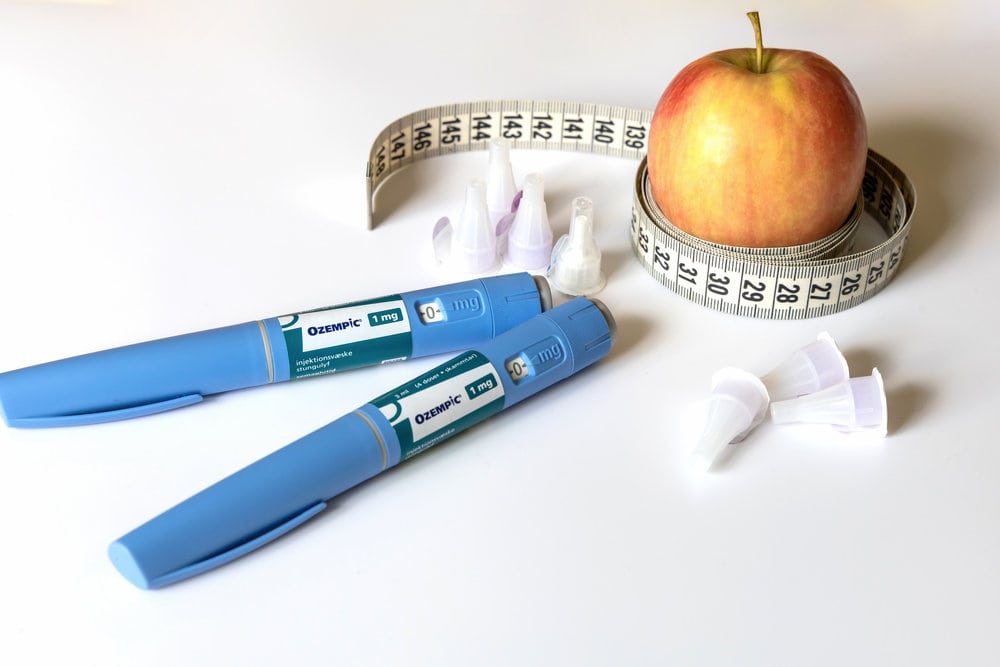
Thousands of people who took Ozempic and other GLP-1 drugs for diabetes or weight loss have sued the drugmakers, claiming the companies failed to warn them about two kinds of serious injuries: stomach paralysis and sudden, permanent vision loss.
As of November 2026, more than 4,000 stomach injury cases and nearly 280 vision loss cases were pending in two federal courtrooms in Philadelphia. No case has gone to trial, and neither Novo Nordisk nor Eli Lilly has announced a settlement.
Which Drugs Are Involved
Ozempic is a once-weekly injection of semaglutide made by Novo Nordisk. The FDA approved it in 2017 to treat type 2 diabetes. Semaglutide belongs to a class of drugs called GLP-1 receptor agonists, which mimic a hormone the gut releases after meals. They lower blood sugar, slow the emptying of the stomach and reduce appetite, which is why they became so popular for weight loss.
The lawsuits name several GLP-1 drugs:
- Novo Nordisk: Ozempic and Wegovy (semaglutide injections), Rybelsus (semaglutide tablets) and Saxenda (liraglutide)
- Eli Lilly: Mounjaro and Zepbound (tirzepatide) and Trulicity (dulaglutide)
Stomach Paralysis Lawsuits
The first GLP-1 lawsuits claimed the drugs caused gastroparesis, often called stomach paralysis, a condition in which the stomach empties far too slowly. People with gastroparesis can suffer severe nausea, repeated vomiting, abdominal pain and malnutrition, and some are hospitalized. Related claims involve ileus and intestinal blockages, in which the bowel stops moving food along.
One of the first cases was filed in August 2023 by Jaclyn Bjorklund, a Louisiana woman who said she suffered severe stomach injuries after taking Ozempic and then Mounjaro. Her lawsuit alleged that Novo Nordisk and Eli Lilly downplayed how serious these stomach problems can be. Similar cases followed across the country.
In early 2024, the federal cases were consolidated in a multidistrict litigation (MDL), MDL No. 3094, in the U.S. District Court for the Eastern District of Pennsylvania. The case is now before Judge Karen S. Marston. As of November 2, 2026, 4,082 cases were pending.
The court has ruled that a gastroparesis claim requires a diagnosis based on a properly performed gastric emptying study, a test that measures how quickly food leaves the stomach. From September 14 to 18, 2026, the court held a hearing on expert testimony about whether the drugs can cause these injuries and whether the warnings were adequate, and it heard closing arguments on October 13. Those rulings were pending as of November 2026.
The FDA added ileus to Ozempic’s label in September 2023. Later label changes added warnings about severe stomach and intestinal side effects.
Vision Loss Lawsuits
Newer lawsuits claim GLP-1 drugs can cause non-arteritic anterior ischemic optic neuropathy, known as NAION. It happens when blood flow to the optic nerve drops, damaging the nerve. NAION usually causes sudden, painless vision loss in one eye. The damage is permanent, and there is no proven treatment.
A July 2024 study from Massachusetts Eye and Ear, published in JAMA Ophthalmology, found a higher risk of NAION in patients taking semaglutide than in patients taking other medications. Other studies have reached different conclusions. In June 2025, a safety committee of the European Medicines Agency concluded that NAION is a very rare side effect of semaglutide, affecting up to 1 in 10,000 people. On November 9, 2026, the FDA required the makers of all GLP-1 drugs to add a warning about a potential increased risk of NAION to their U.S. labels.
On December 15, 2025, the Judicial Panel on Multidistrict Litigation created a separate MDL for the GLP-1 vision loss lawsuits, MDL No. 3163, also before Judge Marston in Philadelphia. As of November 2, 2026, 278 cases were pending. The court has ordered that the questions of whether the drugs can cause NAION and whether the warnings were adequate be decided first. Expert reports are due in March 2027, and motions challenging expert testimony and seeking summary judgment are due in July 2027. No trial date has been set.
Settlements and Compensation
Neither Novo Nordisk nor Eli Lilly has announced a settlement of the stomach injury or vision loss cases, and there is no settlement fund or claim form. Both companies deny the allegations.
In these claims, compensation can cover medical expenses, past and future, along with pain and suffering and loss of enjoyment of life. A spouse may have a separate claim for loss of consortium. The value of any claim depends on the injury, how well the medical records document it, and the timing of the drug use.
Who May Have a Claim
People who took a GLP-1 drug and were later diagnosed with NAION or sudden vision loss in one or both eyes may have a claim, as may people diagnosed with gastroparesis confirmed by a gastric emptying study. Every state sets a deadline for filing, called the statute of limitations, and these deadlines often run from when a person knew or should have known the injury was linked to the drug.
Doyle APC is investigating GLP-1 vision loss claims nationwide.
Common Questions
What are the Ozempic lawsuits about?
The lawsuits claim that Novo Nordisk and Eli Lilly failed to warn patients and doctors that GLP-1 drugs such as Ozempic, Wegovy and Mounjaro can cause serious injuries, mainly gastroparesis (stomach paralysis) and related intestinal blockages, and NAION, a form of sudden, permanent vision loss.
Is there a class action against Ozempic?
No. These are individual injury lawsuits, grouped in two federal multidistrict litigations (MDLs) so pretrial matters can be handled together. Each person keeps their own claim. People often search for an Ozempic class action, but these are mass torts, not class actions.
How many Ozempic lawsuits have been filed?
As of November 2, 2026, 4,082 stomach injury cases were pending in MDL No. 3094 and 278 vision loss cases were pending in MDL No. 3163, both in the U.S. District Court for the Eastern District of Pennsylvania.
Has there been an Ozempic settlement?
No. As of November 2026, neither Novo Nordisk nor Eli Lilly has announced a settlement, and no case has gone to trial.
Do I need a gastric emptying study for a gastroparesis claim?
Yes. The court overseeing the federal stomach injury cases has ruled that a gastroparesis claim requires a diagnosis based on a properly performed gastric emptying study.
What is NAION?
NAION, or non-arteritic anterior ischemic optic neuropathy, is damage to the optic nerve caused by reduced blood flow. It usually causes sudden, painless vision loss in one eye, and the damage is permanent.
Injured by Ozempic or Another GLP-1 Drug?
Doyle APC helps people and families nationwide. You pay nothing unless we recover.