California is not a bystander in the new lawsuit against telehealth giant Hims & Hers. The State is a plaintiff.
On July 29, 2026, the Federal Trade Commission, the People of the State of California, and the Utah Division of Consumer Protection jointly sued Hims & Hers Health, Inc. in federal court in San Francisco. The complaint alleges that the company promised customers a free consultation with a medical provider and a private, secure process, then charged them for automatically renewing prescription subscriptions before most of them ever learned what they had been prescribed, and shared their sensitive health information with Meta, Snap, and a long list of other advertising platforms.
The case is Federal Trade Commission et al. v. Hims & Hers Health, Inc., case number 3:26-cv-07871, in the U.S. District Court for the Northern District of California. You can read the FTC’s announcement of the case here. Hims & Hers denies the allegations and says it will defend itself vigorously.
If you are a California resident who signed up with Hims or Hers for hair loss, sexual health, mental health, skin, or weight loss treatment, this case may describe what happened to you. California law also gives you protections that customers in most other states do not have.
California Is a Named Plaintiff
The California claims are being brought by the People of the State of California, acting through Los Angeles County Counsel Dawyn R. Harrison, with outside counsel at Tusan Law. California is asserting two of the state’s core consumer statutes, the False Advertising Law and the Unfair Competition Law, and is asking the court for an injunction, restitution for consumers, and civil penalties of up to $2,500 for each violation of each statute.
Within its Unfair Competition Law claim, California is also alleging violations of the state’s Automatic Renewal Law and of the right to privacy guaranteed by Article I, Section 1 of the California Constitution. Those are California specific theories. They are the reason this case looks different for a customer in Sacramento than for a customer in Phoenix.
The “Free Consult” Many Customers Say They Never Got
According to the complaint, since at least 2019 Hims & Hers has advertised a “free consult,” a “free online visit,” and a “free assessment” with a licensed medical provider across social media, television, radio, and podcasts. The company also told customers they could connect with a provider to find a treatment that was “right for you.”
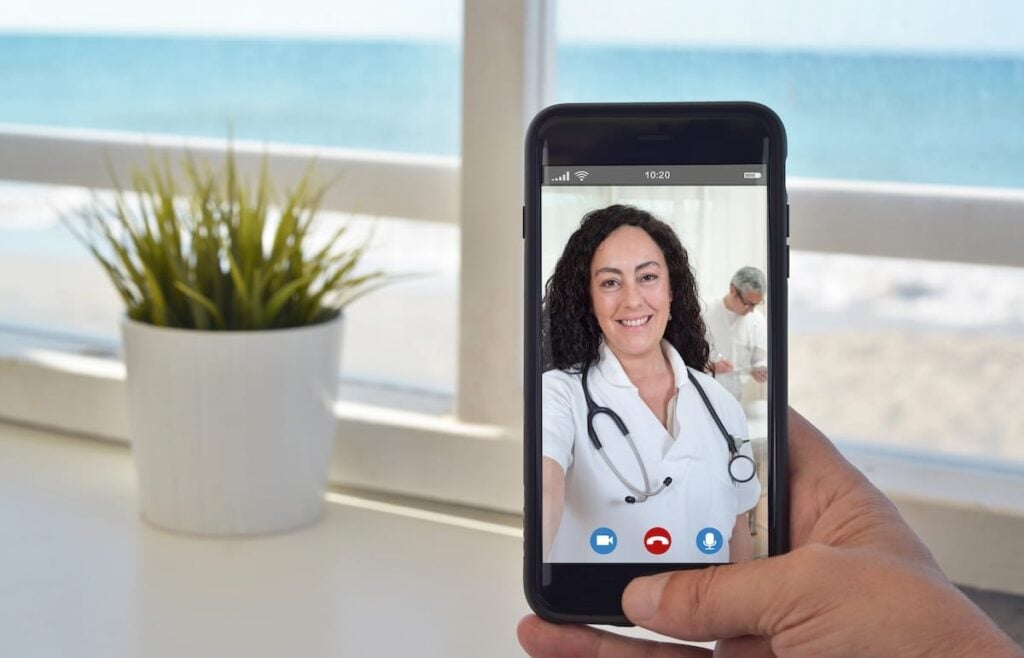
The government alleges that is not how it worked. In most states, the complaint says, a provider reviewed the intake questionnaire and wrote a prescription without ever speaking with the customer. There was no conversation, no chance to ask about alternatives, and no chance to decline. Hims & Hers then charged the card on file immediately, shipped the medication, and enrolled the customer in a recurring subscription.
Most customers, the complaint alleges, were charged and subscribed before they even learned what the provider had recommended.
“Due Now $0” and “Pay $0 Today”
The complaint zeroes in on the final screen of the signup flow, the one where you enter your credit card. According to the government, that screen told customers to save their payment details because they would not be charged until prescribed, displayed a total of “Due Now $0,” and labeled the button “Pay $0 today.” In bold text, it said you would only be charged if prescribed.
Beneath the button, in what the complaint describes as small, faint type, sat the disclosure that if medication was prescribed you were buying an automatically renewing subscription. The government alleges this was neither clear nor conspicuous, and that the conditional “if prescribed” phrasing left customers with no way to understand that pressing the button locked in a charge that would land within hours.
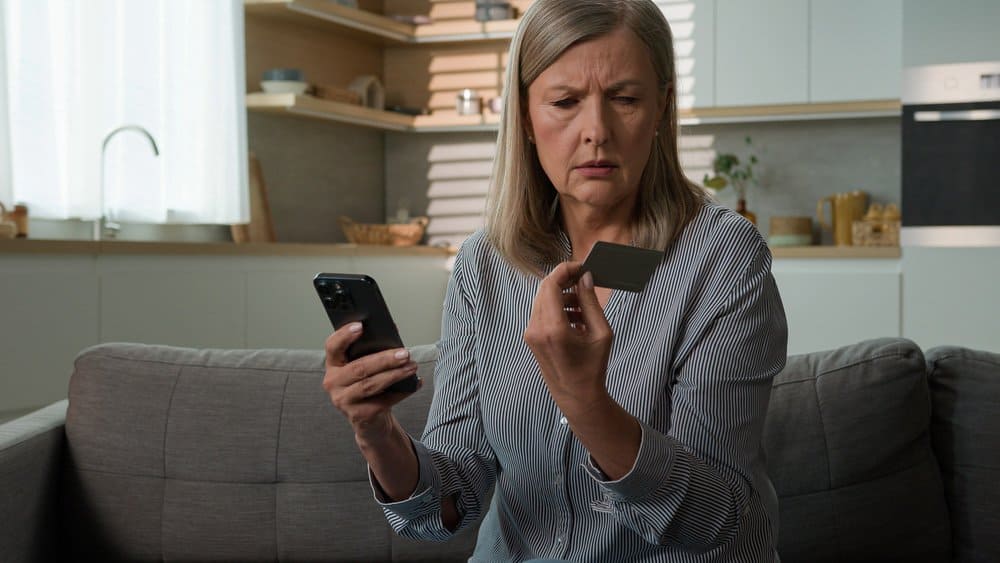
The complaint quotes complaints the company received from its own customers. One said:
“I was told that I would be able to speak with a doctor in a few days and that nothing would be charged to my card that day. Him’s & Her’s [sic] charged me immediately! I never gave consent to apply charges before I spoke with a healthcare professional.”
Another described being automatically prescribed and charged $147 for a three month supply of an antidepressant after answering that they were open to medication but wanted more information first.
Why California’s Automatic Renewal Law Matters Here
California has one of the strictest subscription laws in the country. In plain terms, the Automatic Renewal Law requires a business that signs a Californian up for an automatically renewing plan to do three things:
- Present the renewal terms clearly and conspicuously, and place them right next to where you click to agree, before the charge
- Obtain your express affirmative consent to those terms, not your silence and not a buried acknowledgment
- Avoid misrepresenting any material fact about the transaction, including when you will be charged
California’s complaint alleges Hims & Hers failed on all three. The core allegation is that a customer cannot meaningfully consent to entering a subscription when the company never clearly told them they were entering one.
One date worth knowing: California strengthened the Automatic Renewal Law effective July 1, 2025. Among other things, the updated law requires that if you signed up online, you must be able to cancel online, and it requires annual renewal reminders. Those changes apply to subscriptions entered into, amended, or extended on or after that date. If you signed up recently, a different and stronger set of rules may apply to your situation.
Refill Charges That Arrived Early
The complaint also alleges Hims & Hers failed to clearly disclose when refill charges would hit. Customers chose a shipping cadence of one, three, six, or twelve months, but according to the government the company routinely processed the first refill ten days early, and required cancellation at least two days before that date to avoid the charge.
On a monthly plan, that means the charge landed around day twenty and the real deadline to cancel was around day eighteen, not day thirty. Some later refills were processed up to two additional days early for holidays or other operational reasons. The government alleges customers generally were not sent reminders of upcoming refill dates, so many missed the window and paid for medication they did not want.
Cancellation, and a California Wrinkle
From at least 2019 through early 2025, the complaint alleges, Hims & Hers made cancelling difficult. Before April 2023, most customers had to reach customer service by phone, email, or chat. When online cancellation arrived on the websites in April 2023, the government alleges it was built to obstruct: the word “cancel” appeared nowhere on the subscription page, customers had to guess that a button labeled “Add/remove items from order” led to cancellation, guess again that unchecking every item would unlock it, and then click through roughly three to ten survey and retention screens before the request was accepted.
Here is the California specific detail, and it cuts in an unusual direction. According to the complaint, in June 2022 Hims & Hers built a simple single click cancel button and gave it to customers in California and Colorado only. When the company later rolled cancellation out to other states, the government alleges it deliberately chose the older, more obstructive version instead.
For California customers, that means the timing of your signup matters. If you were trying to cancel a California account before mid 2022, you were in the phone and email era. The complaint also alleges that customers using the mobile apps had an equal or worse experience than website users, so app users may have faced obstacles even later.
Health Data, Advertising Pixels, and the California Right to Privacy
People come to Hims and Hers for conditions the complaint describes as typically very private, including mental health, erectile dysfunction, and premature ejaculation. The government alleges the company built its marketing on exactly that sensitivity.
Until at least late August 2023, the complaint says, the Hims website answered the question “How does Hims ensure patient privacy?” by assuring customers that their medical records and sensitive information were only accessed by the medical providers managing their care. Online ads promised a “100% online, private, and secure” process. Paid influencers, whose posts the company reviewed and approved, called the service “discreet.” Television and radio ads called it “totally private.”
At the same time, the complaint alleges, Hims & Hers was sharing customer health information with advertising platforms in two ways: by uploading customer lists to companies like Meta and Snap so those platforms could match customers to their accounts, and by running tracking pixels on its own site that automatically reported customer activity back. Beyond Meta and Snap, the complaint identifies pixels from Microsoft, Google, Criteo, MediaBids, PartnerCentric, PebblePost, Pinterest, Reddit, StackAdapt, TikTok, The Trade Desk, and X, formerly known as Twitter.
California’s claim alleges this sharing continued through at least May 2024, and frames it not only as false advertising but as an intrusion on the right to privacy protected by the California Constitution, which reaches private companies and not just the government.
What Hims & Hers Says
The company has responded forcefully. In a public statement, Hims & Hers said the lawsuit disregards substantial evidence it provided during a nearly three year investigation, ignores established state laws and industry standards in telehealth, and contorts the law to manufacture claims. It called the case an effort to generate headlines at its expense and said it is confident in its position.
Hims & Hers separately published a statement reaffirming its commitment to privacy, saying its privacy policy explains its data practices and that information patients share with their healthcare providers is used only in providing care.
These remain allegations. Hims & Hers has not been found liable for anything and will have a full opportunity to answer in court. Portions of the publicly filed complaint are redacted, so some of the government’s evidence is not visible to the public yet.
What This Means for California Customers
The FTC and State case is a government enforcement action. Consumers do not join it, and there is no claim form, settlement fund, or payout at this stage.
What California customers should understand is that their own rights are separate from that case and do not depend on it. California consumers can bring their own claims under state law, including claims to stop practices that are still affecting the public. Those claims belong to the consumer, not to the government, and they proceed on their own track.
It is worth having your situation reviewed if you are a California resident and any of the following happened:
- You filled out a Hims or Hers intake form expecting to speak with a provider first, and were charged before you ever did
- You were charged for a prescription you did not knowingly agree to buy
- You were billed for a refill earlier than you expected, or after you believed you had cancelled
- You tried to cancel and could not find a way to do it, gave up, and kept getting billed
- You used the Hims or Hers mobile app and could not cancel through it
- You were treated for a sensitive condition and are concerned your health information reached advertising platforms
Two details make a real difference to how your situation is evaluated, so try to pin them down: when you signed up, and whether you signed up and cancelled on the website or in the app. California’s rules have changed over the past few years, and the version of the law that applies to you depends on your dates.
Before you do anything else, gather your own records. Bank and credit card statements showing the charges, account emails and shipping notices, any screenshots of the signup or cancellation screens, and any customer service messages or chat transcripts. Those documents are the case, and they are far easier to collect now than a year from now.
Free Case Review for California Hims and Hers Customers
If you live in California and were charged by Hims or Hers for a prescription subscription you did not knowingly agree to, or you are concerned about how your health information was handled, you can request a free and confidential case review. There is no cost, no obligation, and you are never required to hire anyone.
Please include your city and state, roughly when you signed up, the condition you were treated for if you are comfortable sharing it, and whether you used the website or the app.
Hims and Hers Free Case Review
Tell us a little about what happened. There is no cost and no obligation.