Federal lawsuits claiming Apple’s AirTag lets stalkers secretly track their victims are now consolidated in a single court. On October 2, 2026, the Judicial Panel on Multidistrict Litigation created MDL No. 3199, In re: Apple AirTag Marketing, Sales Practices, and Products Liability Litigation, and sent the cases to Judge Noël Wise in the Northern District of California.
The transfer order covers 17 lawsuits pending in 13 federal districts, and the panel noted 12 more related cases in 10 districts that may join them. Apple opposed creating the MDL.
Almost every case follows the same pattern. A former partner or another abuser hides an AirTag in the victim’s car, purse or a child’s belongings, and the victim’s phone either warns them late or never warns them at all. The lawsuits claim Apple released the tracker knowing it could be used this way and without safeguards that would actually stop it.
What the AirTag stalking lawsuits allege
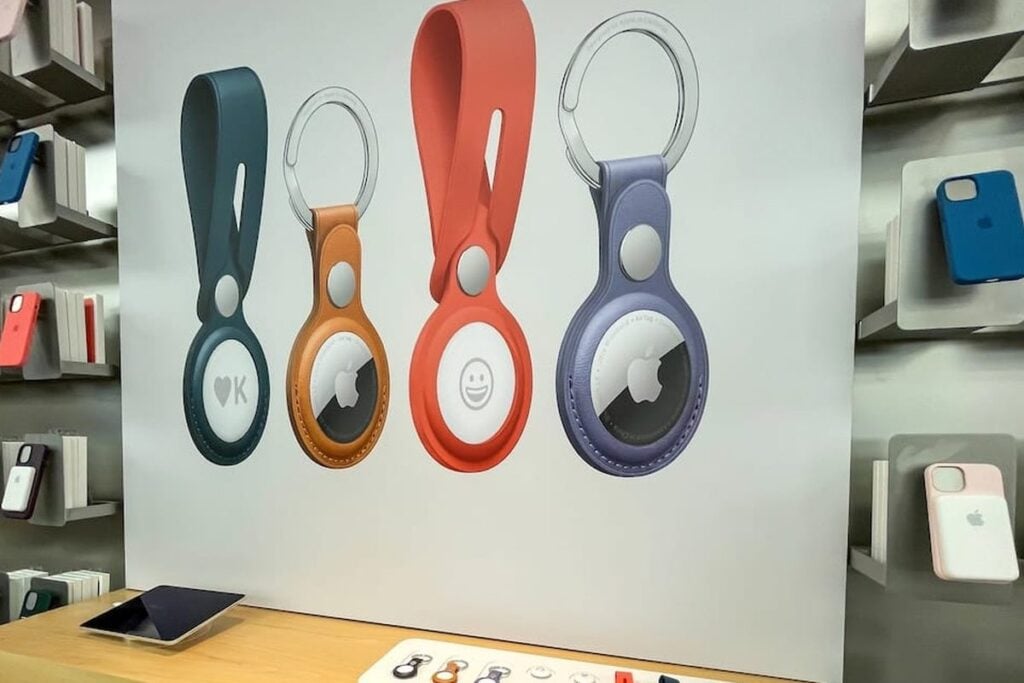
Apple released the AirTag in April 2021 as a $29 tracker for keys, bags and other belongings. It reports its location through Apple’s Find My network, which uses nearby Apple devices to pass along the tag’s position. The lawsuits claim that same network made it a cheap and precise tool for following people.
The complaints allege that Apple received more than 40,000 reports of unwanted tracking between April 2021 and April 2024, an average of more than 1,000 a month. They quote internal Apple material saying the AirTag’s anti-stalking features were meant to “deter as opposed to prevent” misuse. Several also allege that weeks after launch, Apple CEO Tim Cook was briefed on press coverage calling the AirTag a new means of inexpensive, effective stalking.
The design claims focus on how and when a person is warned:
- Delayed alerts. At launch, an AirTag away from its owner did not chime for three days. Apple shortened that in June 2021 to a random time between 8 and 24 hours, which the lawsuits say still leaves hours of tracking.
- A quiet, easily disabled speaker. The complaints say the chime is soft and that the speaker can be removed, and that silenced AirTags have been sold online.
- No automatic phone alerts for Android users at launch. Android users had only the AirTag’s own chime. Apple’s Android app, Tracker Detect, came out in December 2021, and the lawsuits say it only scans when a user opens it and starts a scan by hand. Google began rolling out automatic unknown tracker alerts on Android in July 2023, and Apple and Google later announced cross-platform tracking alerts in May 2024.
The lawsuits also propose safer designs they say Apple could have used, such as identity checks before live tracking, persistent alerts, louder and tamper-resistant speakers, and disabling a tag whose speaker has been removed. The claims include negligence, strict liability design defect, invasion of privacy and violations of state consumer protection laws. Plaintiffs seek compensatory and, in several cases, punitive damages.
What the individual complaints describe
LegalScoops reviewed four individual complaints filed in 2026. Most plaintiffs sue under pseudonyms, and we do not identify them. Each account below is an allegation in a complaint.
An Android user who was never warned
A North Dakota business owner says a former partner tracked her for months beginning no later than March 2023, appearing wherever she went, including on her work deliveries. An AirTag was later found hidden in her vehicle when it was in for service. She used an Android phone, had installed Tracker Detect and ran manual scans, but says she never received a notification. The complaint, filed August 17, 2026 in federal court in North Dakota, says he assaulted her twice and ran her off the road, and that she developed post-traumatic stress disorder, panic attacks, anxiety and depression that led to a psychiatric hospitalization.
A tracker in a child’s shoe
A Florida mother says her former partner tracked her from 2024 into late 2025. She first found a tracker in her daughter’s shoe, then found more inside a suitcase and inside a tablet. Her iPhone did alert her to one AirTag, but only about two days after the tracking began, according to the complaint. She says he used the tracking to find her and took their daughter in violation of a custody order. She reported it to the sheriff’s office and claims emotional distress and relocation costs. Her case, filed August 2, 2026 in the Middle District of Florida, was one of three that asked the panel to create the MDL.
A magnet under the car
An Oregon woman says she found an AirTag taped to a magnet and stuck under her car in January 2026 while inspecting the vehicle herself. She carried an iPhone and says it never alerted her. According to her complaint, filed September 16, 2026 in federal court in Oregon, her former partner tracked her several times, destroyed property and made threats, and was later charged with stalking using a GPS device. She obtained a restraining order and claims anxiety, hypervigilance and the costs of protecting herself.
A tag in a five-year-old’s pocket
A Massachusetts mother says her former partner hid an AirTag among their young son’s belongings. At a mall in January 2026, she alleges, he used it to track her and told her she could not leave with the boy. She found the tag in her son’s pocket and removed its battery. He then sent her screenshots of AirTag location data. She later found another tag in her car’s rear door handle after hearing it chime, and says her iPhone never sent an alert. Her complaint, filed October 7, 2026 directly in the Northern District of California, also claims violations of California’s privacy law against electronic tracking.
Other reported cases describe similar facts. Two Michigan women say AirTags were found under a car seat and in a vehicle after they left abusive relationships, and a New York mother says she and her children were tracked despite a protection order.
How a failed class action became a mass tort
The litigation began as a proposed class action, Hughes v. Apple, filed in December 2022 in San Francisco federal court. Judge Vince Chhabria allowed the case to move forward but denied class certification on March 9, 2026. At a hearing days earlier, he said causation could not be decided for a class as a whole, called the litigation a mass tort, and said a multidistrict proceeding would be a better fit.
After the certification ruling, most of the plaintiffs were severed from the class case and had to refile their claims as separate lawsuits. Dozens of individual lawsuits followed in courts across the country, and plaintiffs asked the panel in August to bring them together. Apple told the panel it had settled 20 cases in the prior two months.
People often search for an “AirTag class action,” but these are now individual claims. In an MDL, each person keeps their own lawsuit while the cases share discovery, expert issues and pretrial rulings before one judge. Any recovery depends on each person’s own facts and injuries.
Apple’s position
Apple says the AirTag was designed to help people locate their belongings, not to track people, and that it condemns malicious use of its products. It points to what it calls industry-first safety features: alerts on iPhone and iPad, the separation chime, louder alerts, Precision Finding for unknown AirTags, instructions to disable a tag and the cross-platform alerts built with Google.
In opposing the MDL, Apple argued that each case turns on its own facts, including the criminal acts of the person who planted the tag, whether the safety features worked for that plaintiff and which state’s law applies. The panel disagreed. It found common questions about what Apple knew at launch, whether its safeguards were adequate, whether safer designs were feasible and how Apple responded to stalking reports. It also cited the plaintiffs’ point that Apple has received tens of thousands of AirTag stalking complaints, which the panel said suggests more cases may follow.
What comes next
Judge Wise has not yet appointed plaintiffs’ leadership or set a schedule. The panel noted that discovery in the class case was limited to class certification, that Apple has not yet produced company witnesses for depositions and that expert discovery on the AirTag’s design has not started. Those steps, along with any early motions to dismiss, will shape the litigation over the coming months. New federal AirTag stalking cases filed in other districts can be transferred into the MDL as tag-along actions.
Common Questions About the AirTag Stalking Lawsuits
Is there an Apple AirTag class action lawsuit?
Not anymore. The original class action, Hughes v. Apple, was denied class certification in March 2026. Victims now file individual lawsuits, and the federal cases are coordinated in MDL No. 3199 in the Northern District of California.
What is MDL 3199?
MDL 3199 is the federal multidistrict litigation for AirTag stalking claims against Apple, created on October 2, 2026. Judge Noël Wise of the Northern District of California oversees pretrial proceedings for the cases transferred to or filed in the MDL.
What do the AirTag lawsuits claim Apple did wrong?
They claim Apple knew the AirTag could be used to stalk people, received tens of thousands of reports of unwanted tracking, and still relied on safeguards that were slow, easy to defeat and gave Android users no automatic alerts at launch.
Can Android users file an AirTag stalking lawsuit?
Yes. Android users are among the plaintiffs. The lawsuits allege that Android users received no automatic phone alerts when the AirTag launched and had only a manual scanning app from December 2021 until Google began rolling out automatic alerts in July 2023.
Has Apple settled any AirTag stalking cases?
Apple told the panel in August 2026 that it had settled 20 cases over the prior two months. The terms have not been made public. The panel noted that settlement activity slowed after the MDL request was filed.
Is there a deadline to file an AirTag stalking claim?
Yes. The statute of limitations depends on the state and the type of claim. In many states the deadline can turn on when the person knew, or reasonably should have known, about the tracking and the harm it caused. Some deadlines are short.
Were You Tracked With an AirTag?
Doyle APC is investigating AirTag stalking claims against Apple nationwide. If someone secretly tracked you with an AirTag and you were harmed, you can request a free, confidential case review below. There are no fees or costs unless the firm recovers compensation for you.
If you may still be tracked, consider using a device and email account the other person cannot access, and tell us the safest way to reach you.
If you are in immediate danger, call 911. The National Domestic Violence Hotline is available 24 hours a day at 1-800-799-7233, or text START to 88788.